Pekoe Trail Sri Lanka: The Ultimate Complete Guide
Table of Contents
- What Is the Pekoe Trail Sri Lanka?
- Quick Facts at a Glance
- The Route: From Start to Finish
- The Best Stages of the Pekoe Trail Sri Lanka
- Terrain and Environment
- Wildlife Along the Trail
- Cultural Significance
- Best Time for Pekoe Trail Trekking
- How to Prepare
- Permits and Practical Information
- Where to Stay
- How to Get There
- Sustainable Trekking Tips
- Frequently Asked Questions
- Final Thoughts
1. What Is the Pekoe Trail Sri Lanka?
If you are looking for the most rewarding walk in Sri Lanka, the Pekoe Trail Sri Lanka deserves a top spot on your list. This is the island’s first long-distance walking trail, stretching over 300 kilometres (186 miles) across the stunning central highlands. It is a journey through mist-covered mountains, ancient tea estates, remote villages, colonial history, and extraordinary biodiversity.
The trail was fully opened in 2024 and was carefully designed to connect the historic tea-growing regions of the hill country through a network of 22 interconnected stages. Each stage has its own character, landscape, and story to tell.
The name itself is deeply tied to Sri Lanka’s most famous export. The word “Pekoe” refers to the young tea buds and leaves that are carefully hand-plucked from tea plants. Orange Pekoe is one of the most well-known grades of Ceylon tea. By naming the trail after this iconic leaf, the route pays tribute to the tea heritage that has shaped the hill country for over 150 years.
Whether you are planning your first long-distance trek or adding another great trail to your list, the Pekoe Trail Sri Lanka offers an experience that is both physically rewarding and deeply moving.
2. Quick Facts at a Glance
| Detail | Information |
| Total Distance | Over 300 km (186 miles) |
| Total Stages | 22 stages |
| Start Point | Hanthana (Ceylon Tea Museum), near Kandy |
| End Point | Pedro Tea Estate, Nuwara Eliya |
| Average Stage Length | 12 to 16 km (7.5 to 10 miles) |
| Time per Stage | Approximately 4 to 6 hours |
| Full Trail Duration | Around 22 days |
| Difficulty | Easy to Difficult (varies by stage) |
| Best Season | December to April (primary), July to September (secondary) |
| Opened | 2024 |
| Trail Pass Required | Yes, Pekoe Trail Pass |
3. The Route: From Start to Finish
The Pekoe Trail Sri Lanka begins at the Ceylon Tea Museum in Hanthana, on the outskirts of Kandy. Kandy is Sri Lanka’s cultural capital and a wonderful place to spend a day or two before starting the trail. From Hanthana, the trail winds southward through the heart of the central highlands, passing through some of the most iconic towns and landscapes in the country.
The trail moves through major hubs including Hatton, Haputale, and Ella, before concluding at the Pedro Tea Estate in Nuwara Eliya. Nuwara Eliya is a charming hill town often called the “Little England” of Sri Lanka because of its cool climate and British colonial architecture.
The route connects four distinct regions of the hill country, each with its own personality:
Kandy Area (Stages 1 to 5): The trail starts at the Ceylon Tea Museum in Hanthana and winds through spice gardens and the birthplace of Ceylon tea at Loolecondera Estate.
Hatton Area (Stages 6 to 10): You move into high-altitude tea estates and pass the foothills of Pidurutalagala, Sri Lanka’s highest peak.
Haputale and Ella Area (Stages 11 to 16): This section features some of the most dramatic scenery on the entire trail, including Lipton’s Seat, World’s End at Horton Plains, and the famous Nine Arches Bridge.
Nuwara Eliya Area (Stages 17 to 22): The final section brings you into the cool heights of Nuwara Eliya, ending at the Pedro Tea Estate.
4. The Best Stages of the Pekoe Trail Sri Lanka
The trail has 22 stages and each one offers something special. However, a few stages consistently stand out for their scenery, historical depth, and the overall trekking experience they deliver. Here are four of the best stages for anyone planning their pekoe trail trekking adventure.
Stage 2: Galaha to Loolecondera
Distance: 14.5 km (9 miles)
Difficulty: Hard
Estimated Time: 5 to 6 hours
This is the most historically significant stage on the Pekoe Trail Sri Lanka. It leads you to Loolecondera Estate, where James Taylor planted the very first commercial tea crop in Sri Lanka back in 1867. You will pass James Taylor’s Seat, a stone lookout where he surveyed his fields, and the ruins of his original cottage. Field No. 7, the actual first tea field ever planted in Sri Lanka, is still growing today. The terrain is demanding, with serious climbing through dense forest and high-elevation trails, and the mist often rolls in thick. It is a challenging stage, but historically and scenically, nothing else on the trail quite compares.
More Details>>>
Stage 3: Loolecondera to Deltota
Distance: 11.5 km (7 miles)
Difficulty: Moderate
Estimated Time: 3 to 4 hours
Stage 3 is a wonderful contrast to Stage 2. The pace is easier, but the experience is just as rich. The trail winds through small plantation towns and passes through line rooms, the rows of housing built for Tamil tea estate workers, giving you a genuine look into the daily life of the communities who have worked these hills for generations. On clear days, the distant Knuckles Mountain Range appears on the horizon. The atmosphere is social and warm. Expect to cross paths with school children, local workers, and friendly faces curious about your journey.
More Details>>>
Stage 10: Norwood to Maskeliya
Distance: 16.2 km (10 miles)
Difficulty: Moderate
Estimated Time: 5 to 6 hours
Stage 10 takes you deep into the golden heart of Sri Lanka’s tea country. The defining feature here is the constant, commanding view of Adam’s Peak (Sri Pada) rising in the distance. This sacred mountain, one of the most revered pilgrimage sites in Asia, accompanies you for much of the walk. You will also overlook the Castlereagh Reservoir, a beautiful highland lake often dotted with small boats and seaplanes. The terrain is mostly flat and downhill as you descend toward the Maskeliya Oya river. The plantations here are vast and grand, quite different in scale from the earlier Kandy-area stages.
Stage 11: Maskeliya Area Toward Haputale
Distance: Approximately 13 to 15 km
Difficulty: Moderate to Challenging
Estimated Time: 4 to 6 hours
Stage 11 marks a beautiful transition in the pekoe trail trekking journey. The landscape shifts from the open plains of the Maskeliya area into the more layered, intimate terrain leading toward Haputale. The trail weaves through high-altitude tea estates, misty forest sections, and small rural settlements. Views open up in unexpected moments, with sudden clearings revealing sweeping ridge lines and valleys below. Wildlife encounters become more frequent here, and long stretches of quiet, undisturbed walking give this stage a wonderfully meditative quality.
5. Terrain and Environment
One of the most interesting things about the Pekoe Trail Sri Lanka is the variety of terrain you walk through. No two stages feel exactly the same.
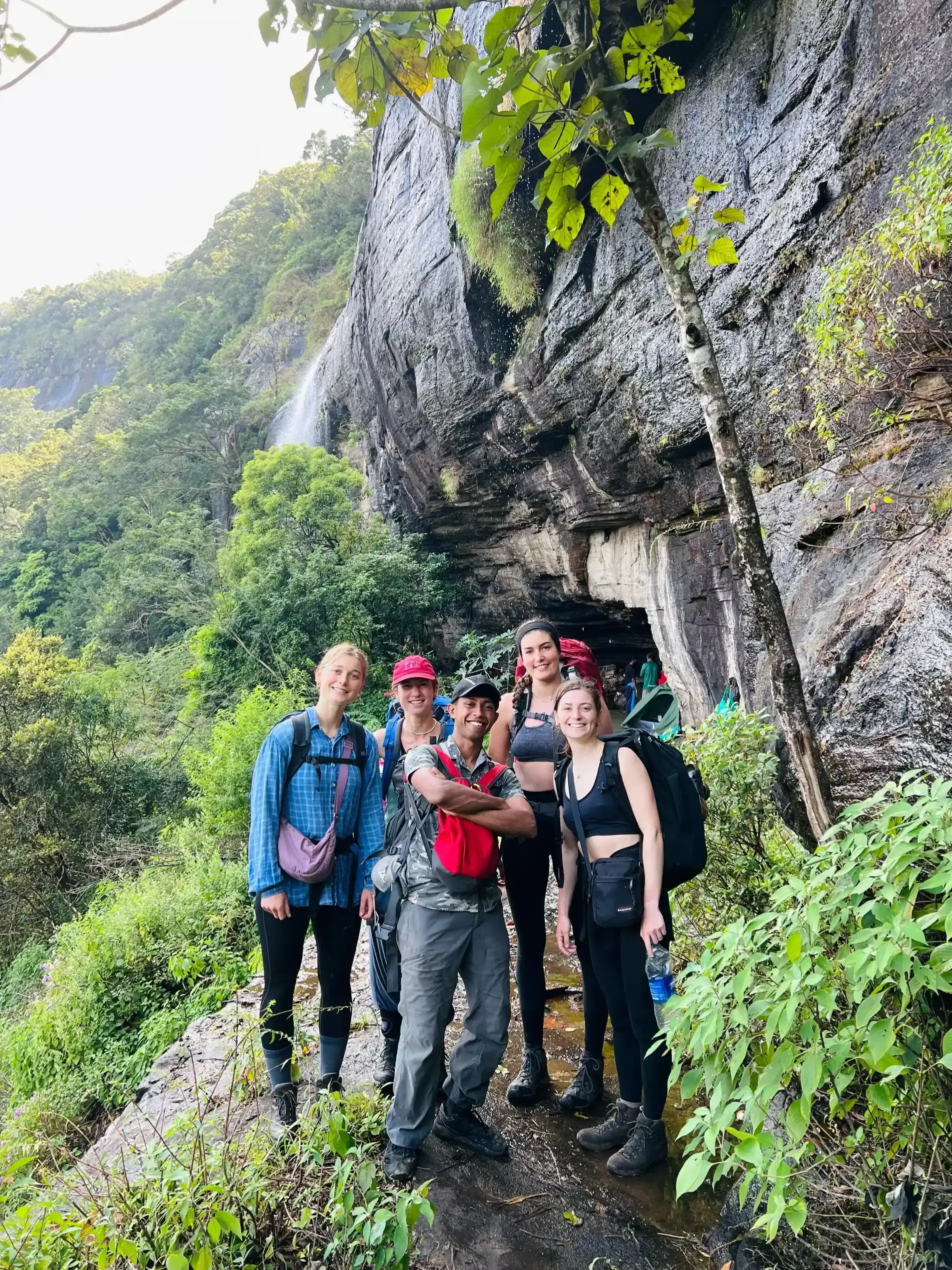
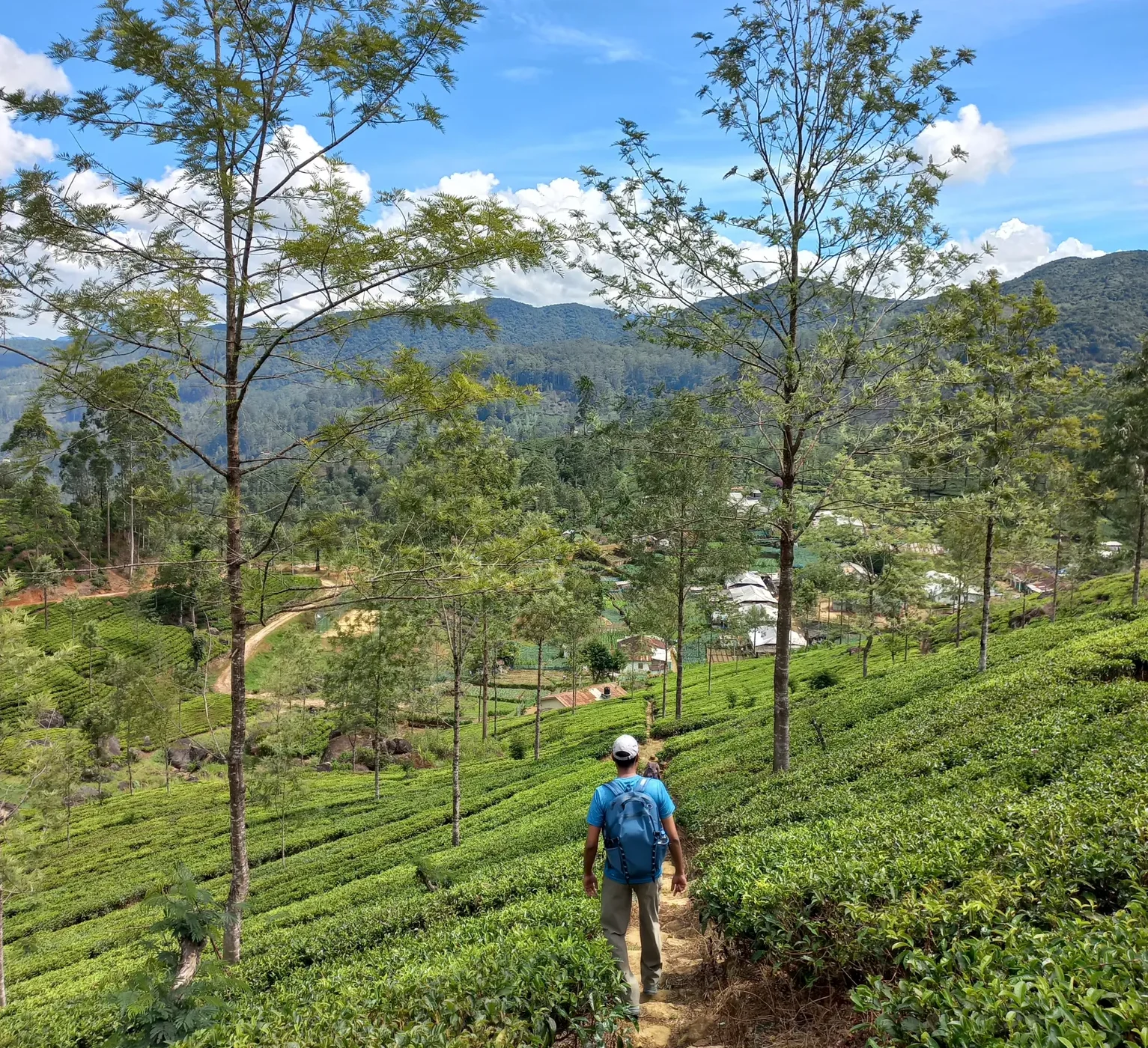
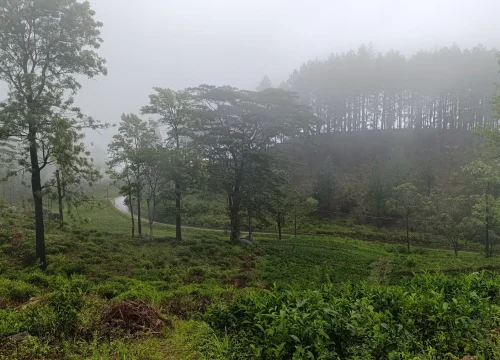
The trail uses a mix of colonial-era horse and cart tracks, paved estate roads, and narrow footpaths worn smooth by generations of tea pluckers walking to work every morning. In terms of landscape, you move through meticulously manicured tea plantations, eucalyptus and pine forests, remote village communities, high-altitude grasslands, and dense cloud forest rich with mosses, ferns, and orchids.
The elevation gain across the full trail is significant. Completing all 22 stages involves a cumulative ascent of over 10,000 metres. However, many individual stages are relatively flat or gently rolling, making them very accessible to trekkers of different fitness levels.
One practical note worth mentioning: leeches are very common during and after rain, especially in forested sections. Bringing leech socks and a tobacco or salt spray is strongly recommended. It is a minor inconvenience that every experienced trekker on the Pekoe Trail Sri Lanka prepares for in advance.
6. Wildlife Along the Trail
The Pekoe Trail Sri Lanka passes through some of the island’s most biodiverse habitats. If you love wildlife, this trail will not disappoint.
Mammals you may encounter include sambar deer, toque macaques, and purple-faced langur monkeys. The trail also passes through forest reserves, particularly around Hanthana and Horton Plains, where leopards are known to inhabit the area. Sightings are rare, but the possibility adds a genuine wildness to those sections.
Birds are a constant highlight throughout the journey. Sri Lanka is home to dozens of endemic species, and the hill country is one of the best places to spot them. Look out for the Sri Lanka white-eye, the dull-blue flycatcher, the yellow-eared bulbul, and the striking Sri Lanka blue magpie. Early mornings are particularly rewarding for birdwatchers.
For a deeper look at Sri Lanka’s endemic and endangered species, the IUCN Red List is a great resource to explore before your trip.
7. Cultural Significance
The Pekoe Trail is as much a cultural journey as it is a physical one. At its heart, it is a story about people — the communities who built the tea industry, the families who still work the estates today, and the remarkable multicultural tapestry of Sri Lanka’s hill country.
As you walk the trail, you will pass historic tea factories, many dating back to the late 1800s, as well as beautifully restored planters’ bungalows that offer a fascinating glimpse into the lives of early British tea planters. You will walk through Tamil tea-picking communities, past Hindu shrines, Buddhist temples, and mosques that reflect the peaceful coexistence of multiple faiths across the hills.
Stage 2 takes you to Loolecondera Estate, the very birthplace of Ceylon tea. Stage 13 brings you to Lipton’s Seat, the favourite lookout point of Sir Thomas Lipton, one of the most famous names in the history of tea. Stage 12 passes through Idalgashinna, widely regarded as having the most beautiful railway station views in Sri Lanka. And Stage 16 delivers one of the most photographed spots in the country: the Nine Arches Bridge near Ella, where the iconic blue highland train crosses a dramatic stone viaduct through the jungle.
8. Best Time for Pekoe Trail Trekking
Getting your timing right makes a big difference when planning your pekoe trail trekking adventure.
December to April is the primary dry season and the ideal time to walk the Pekoe Trail Sri Lanka. The skies are clear, the trails are firm underfoot, and the views across the valley are at their most spectacular. You get crisp mountain air and the most comfortable walking conditions of the year.
July to September offers a secondary window of good conditions. The trail is generally walkable during these months and this can be a lovely quieter period, particularly for the higher elevation stages.
May to June and October to November bring the monsoon rains to different parts of the hill country. Trails can become slippery, leeches are more active, and some river crossings may be tricky. Experienced trekkers who are well-prepared sometimes find that the rainy season has its own dramatic, lush beauty. However, for a first visit, the dry season is the far better choice.
9. How to Prepare
A little preparation makes a huge difference on the Pekoe Trail Sri Lanka.
Fitness: You do not need to be a professional athlete, but regular walking and some basic cardiovascular fitness will help a lot. Start building your stamina a few weeks before your trip and practise on hills or uneven terrain if you can.
Footwear: Comfortable trail running shoes or lightweight hiking boots are recommended. Avoid heavy leather boots as they are uncomfortable on the hard-packed estate roads that make up a large portion of the trail.
Clothing: Bring lightweight, moisture-wicking tops for warmer lower sections, a warm fleece or mid-layer for the high-altitude stages where temperatures drop noticeably, and a quality rain jacket for any time of year.
Gear Essentials:
- Leech socks and leech repellent (tobacco or salt spray)
- Reusable water bottle or hydration system
- High SPF sunscreen and a wide-brim hat
- Trekking poles for steep sections
- A basic first-aid kit
- Offline maps downloaded before you set out
- Cash in Sri Lankan rupees, as card payment is rarely available in rural areas
10. Permits and Practical Information
Pekoe Trail Pass: An official pass is required to walk the trail. You can obtain this through the official Pekoe Trail website or app. Sort this before you travel.
National Park Fees: Some stages pass through national parks, most notably Horton Plains on Stage 15. These sections require an additional park entry fee. International visitors pay a higher rate than locals, so budget for this in advance.
Guides: Hiring a local guide is highly recommended, especially for the harder stages. A good guide improves your safety, helps with navigation, and brings the cultural and natural history of the trail to life in a way that no guidebook can replicate.
11. Where to Stay
The Pekoe Trail Sri Lanka was designed to support local communities along the route. Much of the accommodation is provided by local families, community-run guesthouses, and small homestays. Staying with local families gives you home-cooked Sri Lankan meals, genuine hospitality, and a connection to the place that no hotel can offer.
Near the larger towns such as Kandy, Hatton, Haputale, Ella, and Nuwara Eliya, a wider range of mid-range hotels and eco-lodges is available for those who prefer more comfort. Book accommodation in advance during the peak season between December and April.
12. How to Get There
To the Start (Hanthana, near Kandy): The trail begins at the Ceylon Tea Museum in Hanthana, just outside Kandy. Kandy is well-connected by train and bus from Colombo. The train journey from Colombo Fort to Kandy takes approximately 2.5 to 3 hours and is a scenic ride worth enjoying in its own right.
Getting Between Stages: The famous Colombo to Badulla hill country train line runs close to many of the southern stages, making it easy to reach starting points. You can check timetables and book tickets through the Sri Lanka Railways official website.
To the End (Pedro Tea Estate, Nuwara Eliya): Nuwara Eliya is accessible by train from Colombo or Kandy (alight at Nanu Oya station) or by road. From Nanu Oya, a short tuk-tuk or taxi ride takes you into town and on to the Pedro Tea Estate.
13. Sustainable Trekking Tips
The Pekoe Trail was built with sustainability and community benefit at its core. How you walk the trail matters.
- Carry your rubbish out and leave no trace on the trail or in the communities you pass through
- Use a reusable water bottle and avoid single-use plastic wherever possible
- Buy food, drinks, and crafts from local shops and families along the route
- Stay in community-run guesthouses and homestays to support local livelihoods
- Respect wildlife by keeping a safe distance and never approaching or feeding animals
- Stay on marked paths to protect fragile vegetation and estate property
- Be respectful of religious sites, private property, and local customs
14. Frequently Asked Questions
Where does the Pekoe Trail Sri Lanka start and end? The trail starts at the Ceylon Tea Museum in Hanthana, near Kandy, and ends at the Pedro Tea Estate in Nuwara Eliya.
How long does it take to complete the full trail? Walking all 22 stages takes approximately 22 days. Most people choose to walk selected stages over a few days or a week rather than completing the entire route at once.
Do I need a permit? Yes. An official Pekoe Trail Pass is required. Additional fees apply for stages passing through national parks like Horton Plains.
What is the hardest stage? Stage 2 (Galaha to Loolecondera) is the most difficult, with significant climbing through dense forest and high-elevation terrain.
What is the easiest stage? Stage 16 (Ella to Demodara) is rated easy and is an excellent choice for beginners wanting to experience the trail’s famous scenery around the Nine Arches Bridge.
Are leeches a problem? Yes, especially during and after rain in forested sections. Leech socks and tobacco or salt spray are strongly recommended.
Can beginners do the Pekoe Trail? Absolutely. Many stages are moderate and accessible to people with a reasonable level of fitness. Stage 3 and Stage 10 are great starting points. A guide will help you choose stages that match your ability.
Do I need a visa? Most international visitors need an Electronic Travel Authorization (ETA) before arriving. Apply through the Sri Lanka ETA official portal and check the latest requirements for your country.
15. Final Thoughts
The Pekoe Trail Sri Lanka is one of the most extraordinary long-distance walks in Asia. In 300 kilometres, it takes you from the cultural heart of the island to its misty mountain heights, through 150 years of tea history, past sacred peaks and colonial ruins, and through the lives of communities who have shaped this landscape for generations.
Whether you walk a single stage or commit to the full 22-stage journey, the Pekoe Trail will leave a lasting impression. The mist on the mountains at dawn. The sound of tea pluckers in the fields. Adam’s Peak rising above the clouds. The warmth of a family welcoming you at a homestay after a long day on the trail.
These are the moments that make pekoe trail trekking truly unforgettable.
Sri Lanka is waiting. Lace up your boots and take that first step.
Lanka Trek has been guiding trekkers through Sri Lanka’s most beautiful trails for over 10 years. We offer professional guides, customised packages, and everything you need to experience the Pekoe Trail Sri Lanka safely and memorably. Get in touch to start planning your adventure.
Recent Posts
Pekoe Trail Stage Guide: First 7 Stages Explained
Pekoe Trail Hikes Near Kandy: The Ultimate Guide